Viser opslag med etiketten Can't and Won't. Vis alle opslag

onsdag den 29. april 2015

Aflyste køer

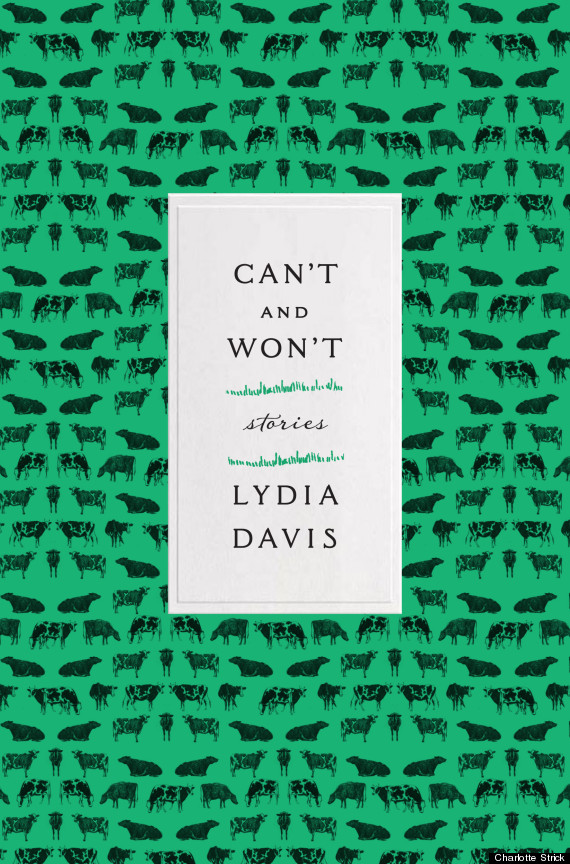
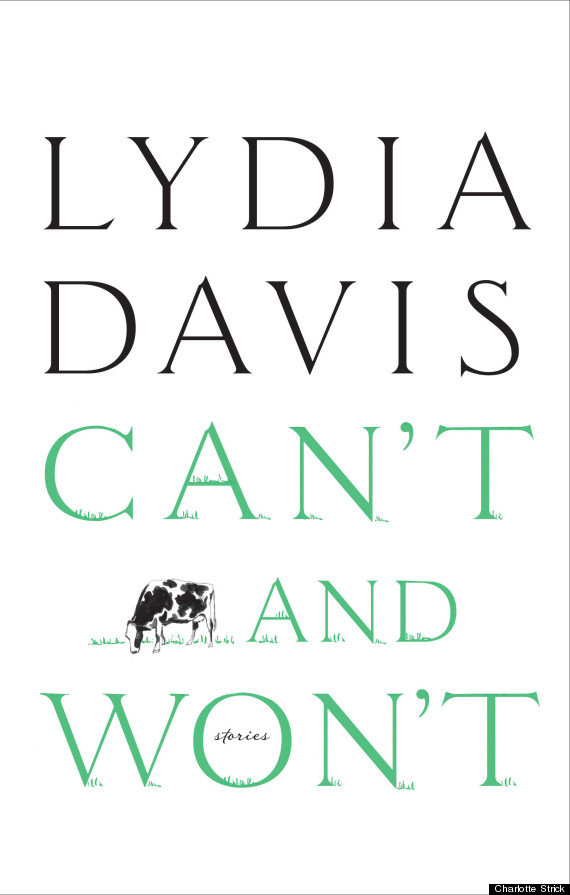
Googlede som en gal efter ny Lydia Davis-tekst, som kunne have være blevet læst op i aftes, men uden held - fandt i stedet to ubrugte omslag til Can't and Won't ved LD's faste omslagsdesigner Charlotte Strick, begge med køer på:

charlotte strick 2

charlotte strick

Stricks kommentar:
Ariana (kotegneren LB) and I went through several rounds of cows. At first they all felt too disengaged and then "not gestural and painterly enough." Lydia hoped they would be "slightly threatening" while also "curious." We changed to a 3/4-view and facial expressions that made it clear these cows weren’t willing to move from their positions on the page, but it started to feel to everyone like the whole cow idea was too cute and Lydia’s work is not cute. She had warned me by email that she "might simply feel in the end that any image of a cow over-determines the way the book is approached..." Clearly it was time to move on.
These early sketches look so fussy to me now, though Ariana’s painting style is simple and sophisticated and the color would be just as limited in the final jacket design. That "final" design was actually one of my very first ideas, scribbled in a notepad, but instead of working it out I’d been seduced by Davis’s bovine neighbors and lost my way. Often you need to build a jacket design till it’s dense with ideas – then find the time, will and clarity to strip, strip, strip away. Lydia’s writing is that stripped down too, and to get a design right for her work I need to remind myself of this.
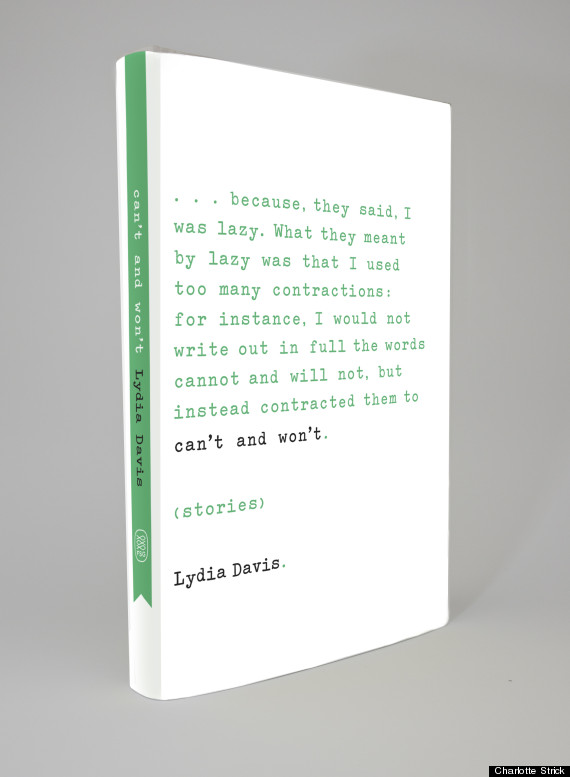
At first I was sorry to see these cows amble off my jacket design, but when I looked back at my computer screen, I saw that what was left was a blank space and these words:
...because, they said, I was lazy. What they meant by lazy was that I used too many contractions: for instance, I would not write out in full words cannot and will not, but instead contracted them to can’t and won’t.
I had to laugh -- it turns out I’d been pretty stubborn too! Davis’s sentences hadn’t needed embellishment; they’d just needed me to stop thinking beyond their simple statement... and for me to find an equally straightforward way to set them on a page.
Finally, I choose to deboss all these words to give them another layer of strength. Like the cows, this book (and its jacket) now quietly stands its ground, daring you to look away.

- det endelige rent bogstavelige, koløse omslag
charlotte strick 4

torsdag den 10. april 2014

Bogens mørknen vækker mig

Jeg falder i let slumren over e-bogen og vågner op med et sæt, da lyset på iPadens skærm, pga. min læseuvirksomhed, dæmpes.

Sådan læste Flaubert, der løbende medvirker i bogen, ikke, men jeg tror ikke, han grundlæggende ville have haft noget imod det.

Det værste, tror jeg også Flaubert ville synes, er den stive, udynamiske måde, man tvinges til at bladre på i en e-bog.

Jeg blev færdig for en times tid siden, bladrer lidt tilbage

The Old Vacuum Cleaner Keeps Dying on Her

The old vacuum cleaner keeps dying on her
over and over
until at last the cleaning woman
scares it by yelling:
"Motherfucker!"

onsdag den 9. april 2014

En af tingene, tingene i huset siger

The suction-cup pencil sharpener being peeled up from top of the bookcase: "Rip van Winkle."

(

)

"Tingene i husets sprog", som jeg glæder mig særligt til, befinder sig to tekster længere fremme

Two Characters in a Paragraph

The story is only two paragraphs long. I'm working on the end of the second paragraph, which is the end of the story. I'm intent on this work, and my back is turned. And while I'm working on the end, look what they're up to at the beginning! And they're not very far away! He seems to have drifted form where I put him and is hovering over her, only one paragraph away (in the first paragraph) . True, it is a dense paragraph, and they're in the very middle of it, and its' dark in there. In knew they were both in there, but when I left it and turned to the second paragraph, there wasn't anyting going on between them. Now look ...

dream

tirsdag den 8. april 2014

Her er jeg kommet til (eller faktisk til den næste tekst igen) og nu tager jeg en pause (for at arbejde)

Grade Two Assignment

Color the fish.
Cut them out.
Punch a hole in the top of each fish.
Put a ribbon thorugh all the holes.
Tie these fish together.

Now read what is written on these fish:
Jesus is a friend.
Jesus gathers friends.
I am a friend of Jesus.

mandag den 7. april 2014

Ransom notes from Lydia

Jeg tekstlæste i Emdrup, og du sendte mig kryptiske sms'er:

Please reconsider your art

The magic of the train

Your pen is moving faster than your fork

There's cat saliva on my sock

- og så viste det sig, at du i Boghallen havde købt bogudgaven af Lydia Davis' Can't and Won't, vistnok oprindeligt bare for at være sød, så jeg kunne læse den sooner end later men så begyndte du at læse for dig selv, og så kunne du ikke holde op, og det var selvfølgelig citater fra bogen, du samvittighedsløst sendte mig, og da jeg kom hjem, tog du lige en kort pause, og jeg fik lov til den allerhurtigste bladren, hvor jeg ikke nåede mere end at falde sekundkort i staver over en tekst, der Seebergsk kondenserede nekrologer, men nu læser du igen, ovre i savbukstolen, læser og læser og nægter at holde op, indtil du snart er færdig, og jeg kan ikke finde ud af for alvor at synes, det er for galt, hvilket det jo er, men på den anden side er du jo dig.


- sådan ser bog-bogen ud, som du har i dine hænder. 

søndag den 6. april 2014

Snart dages Davis

I morgen (eller i nat!?) burde Lydia Davis' med længsel ventede nye bog Can't and Won't poppe op på min iPad: Jeg kan næsten ikke vente, og jeg prøver at ignorere, at jeg så den i vinduet hos Politikens Boghal tidligere i dag (og derfor MÅSKE har været til salg i indtil flere dage dér). Jeg får ventetiden til at gå med at citere fra det fine Lydia-portræt, ved Dana Goodyear, i The New Yorker:

One recent morning, Davis sat at her kitchen table with a pocket-size black notebook and a hardcover novel by a popular writer, whom she asked me not to name. "I don't like to hurt people's feelings, and I don't like to knock other writers as a matter of principle." she said. Though enjoyably soap-operatic, the novel, that month's selection for her book club - local women, wine, family talk - was full of mixed metaphors. "I've gotten very alert not just to mixed metaphor but to any writing mistake," she said. "A little bell goes off in my head first. I know something's wrong here. Then secondly I see what it is." She opened the notebook and read a sentence about an acute intimacy that had eroded into something dull. "Acute is sharp, and then eroded is an earth metaphor," she said. She read another: "'A paper bag stuffed with empty wine bottles.' You'd think he could get away with it, but he can't, beacause 'stuffed' is a verb thar comes from material. It's soft, so it's a problem to stuff it with something hard." There were sentences about camouflaging with veneer, and gliding with an orb, and boomeranging parallels. "Whenever I read this kind of thing, it tells me the writer is not sensitive to the full value of the idea of comparison," she said.
  But to be curmudgeonly was not the point. As she was noting the mistakes, she kept flipping to the back jacket to look at the author's photograph: a relaxed, good-looking man, smiling openly at the camera. A little idea started to take shape, enough for a one-line story. "I just write down one sentence," she said. "This would be assuming a kind of yenta voice: "Such a handsome young fellow to write such bad mixed metaphors.' She smiled. "It's me feeling a little sorry that I'm writing down all his mistakes, because he looks so frindly and nice and in a way innocent. Some author photos don't look so innocent."


"I have to guard against the tendency - I could make anything into a story," Davis told me. Several years ago, she started writing a long note to he literary executor, but had to stop when it began to take on a life of its own. "I was trying just to write instructions, you know, 'My notebooks should go here,' 'You should looh through my notebooks and make sure to take out any references to blah blah blah,'" she said. "But it began to get too elobarate, too detailed, too opinionated, and too irrational. It wasn't a straightforward document anymore. I didn't really want it to become a story, because I needed it to be an actual letter to my executor." She could not pull it back into real life, though, and for the time being the letter is stopped midstream.